
First Alert, First Responder
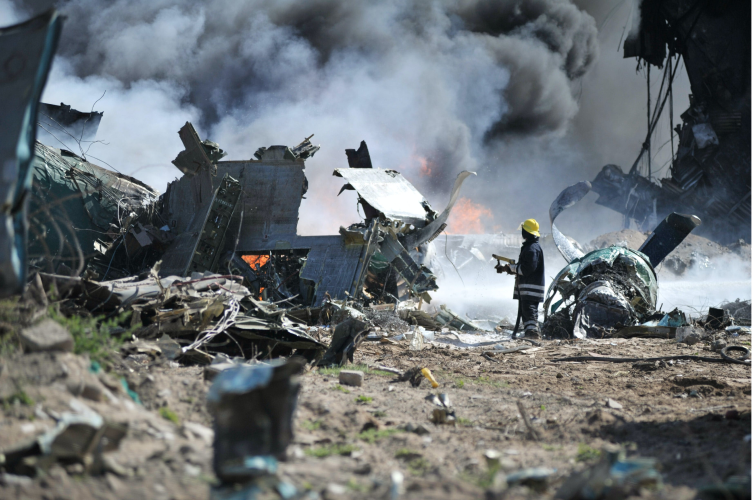
In conjunction with state and local agencies, FEMA (Federal Emergency Management Agency) can only coordinate our nation’s response to terrorist strikes, natural disasters, severe weather conditions, and other catastrophic events if it has a reliable communication network.
However, history has shown that paging devices, cellular phones, internet links (e-mail), telephone and other terrestrial based techniques have many shortfalls, such as jammed networks, inoperative cell towers, interrupted land lines, etc., especially during emergencies.
Here’s where the HySky network can help. It is not a total solution in itself, but it is a valuable and integral piece of the overall first-alert communications puzzle. You see, HySky offers first responders the use of modern and sophisticated adaptations of HF (High-Frequency, i.e., shortwave) channels to communicate with their base operations centers. First responders and mobile units are free to send inbound text messages and other data without depending on any regional infrastructure (not one), and these transmissions are received by up to eight sites scattered around the USA, all of them well beyond the affected region. Messages are then gathered, processed, and relayed to HySky’s Mobile Network Operations Center that can be in, near, or out of the disaster area. Our NOC then forwards the messages to the FEMA Operations Center, all within in a few seconds.
First alert messages and replies to first responders from FEMA’s Operations Center can be sent by two alternatives: via the HySky HF network, or in some instances via a commercial satellite. In any case, the first responder’s transceiver automatically accepts messages from either one, and because , and because HF is simple to use, the transceivers are low cost, efficient, and reliable.
In conjunction with all the other communications media, HySky originality offers redundancy and assurance that critical messages will get through.